
How to Tell If Squirrels Are in Your Attic
It usually starts with a sound: running feet across the ceiling in the morning, something rolling overhead, scratching at the wall. On Long Island — especially in the fall, and through the January-to-June wildlife season — the culprit is often a squirrel that has chewed its way into the attic. Here is how to tell, and how to be sure it is not something else.
Website inquiries answered within 2 hours · Text replies within 15 minutes
The checklist
6 signs squirrels are living in your attic
- Running and rolling sounds — in the daytime. Squirrels are up when you are. Quick running across the ceiling, the sound of a nut rolling overhead, and scratching in the morning and late afternoon is textbook squirrel. Noise only at night points to rats or mice instead.
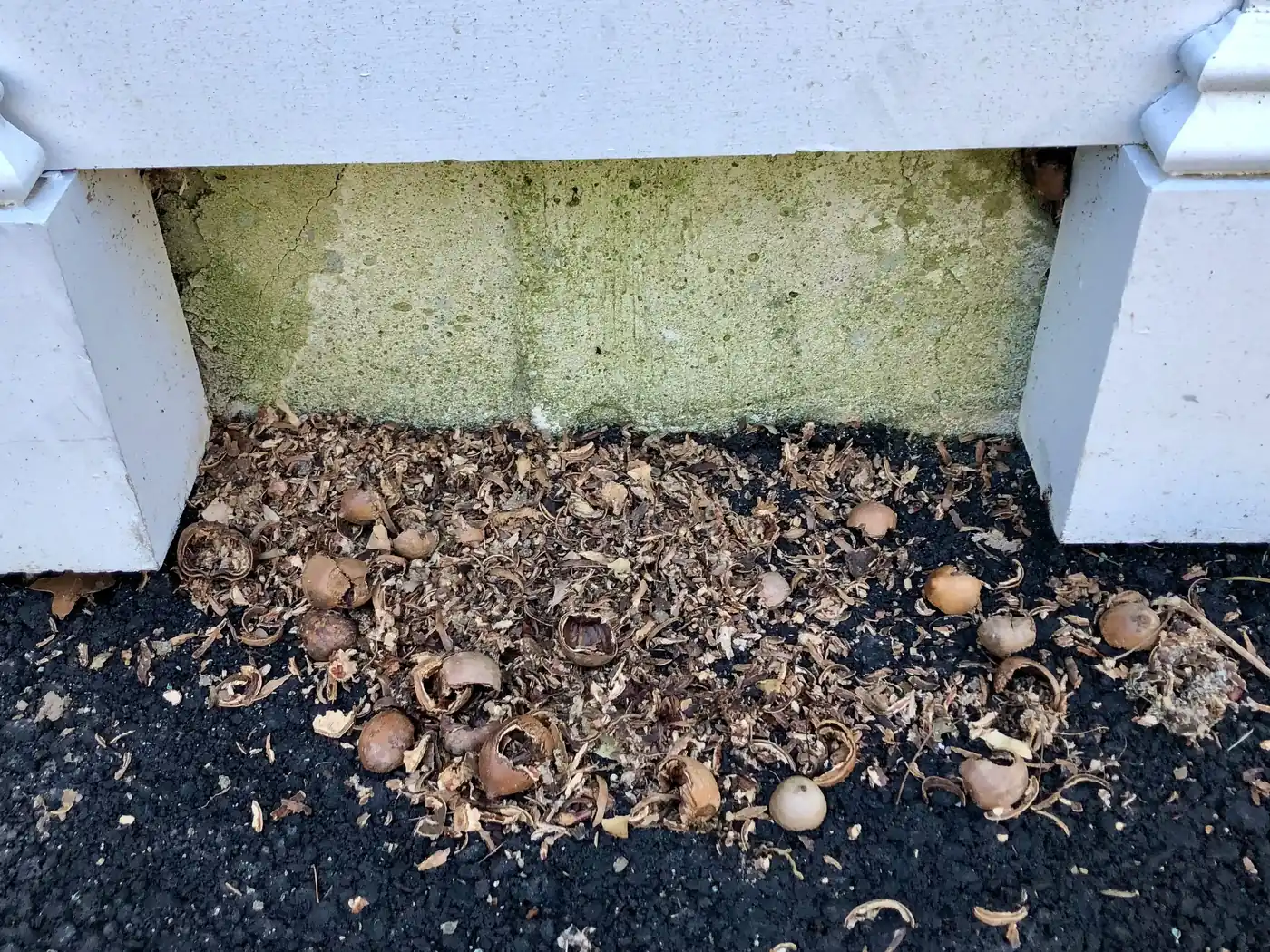
- Acorn shells and nut debris. Piles of cracked acorn and nut shells in the attic, along the foundation, or under one favorite tree mean squirrels are feeding and stashing nearby — and the stash is often inside your roof.
- A chewed entry hole. Squirrels come in high: a gnawed hole two inches or wider at the soffit, fascia, gable vent or roof edge. Check for fresh, light-colored chew marks and a hole that seems to grow week to week.
- Droppings in the attic. Small, dark pellets gathered near the entry point and along runs. They are easy to confuse with rat droppings — one reason a proper inspection matters before any treatment is planned.
- Torn-up insulation and nests. Insulation shredded into piles, leaves and twigs carried in, and nesting spots in the quiet corners of the attic. A nest in winter often means a litter is coming in late winter or spring.
- The same squirrel, on your roof, every day. A squirrel that runs the same route across the roof each morning is usually commuting to a den — yours. Branches touching the roof are the highway it uses to get there.
One sign can be a coincidence. Two or more together — daytime noise plus debris, or a chewed hole plus droppings — means a squirrel has moved in, not passed through.
Where to check
Where squirrels get in, and where they den
The soffits and fascia. The most common entry: squirrels chew through softened or rotted wood where the roof meets the wall. Gable and attic vents. Lightweight vent covers are easy work for squirrel teeth. The chimney flashing. Gaps where the chimney meets the roof give both entry and shelter. Overhanging branches. Not an entry point on its own, but the bridge that lets squirrels reach all the others — branches within a short jump of the roof count. Inside the attic. Look for the nest in the farthest, quietest corner, and droppings and nut shells along the path between the nest and the entry hole.
When to call
Call a licensed wildlife operator when…
You hear daytime running or scratching more than a day or two in a row, find a chewed hole at the roofline, see nut debris or droppings in the attic, or suspect babies are present. Supra removes squirrels humanely — one-way doors or trapping, with a check for litters first — and seals the entry points in chew-proof materials so the next squirrel cannot use the same door. Wildlife season runs January through June, but fall entries are common as squirrels look for a warm den. We serve Nassau County and western Suffolk County from our base in Huntington Station.
If they come back, so do we
Work on sealed entry points is backed by return visits at no additional charge. Licensed in New York State and fully insured. Est. 2024 — the owners bring 25 years of industry experience.